Tuesday, February 02, 2021

Afghan Whigs' "When We Two Parted"

I love the Afghan Whigs.  So when we got the idea for favorite grunge song as a theme post, my pick was obvious.


 "When We Two Parted" is from their album GENTLEMAN.  It was their fourth album but their first big label (ELEKTRA) album.  I like all the band's albums but this one was a real masterpiece.


"Iraq snapshot" (THE COMMON ILLS):

Monday, February 1, 2021.  The KRG remembers a 2004 attack, Hobby Lobby continues ripping off the world and more.


As the new month kicks off, Margaret Griffis (ANTIWAR.COM) reports of January, "At least 168 people were killed, and 295 were wounded during January. Furthermore, mass graves gave up at least 248 known victims. In December, 172 people were killed, and 200 were wounded."


Meanwhile, one US company continues to rip off the Middle East and all it takes is one 'woopsie!' and we all pretend like it didn't happen.  Anugrah Kumar (CHRISTIAN POST) reports:

Weeks after the Museum of the Bible in Washington transferred control of 5,000 disputed manuscripts and bits of papyrus to the U.S. government, officials have repatriated the artifacts to Egypt, from where the items were thought to have been illegally shipped during the Arab Spring.

The handover of the artifacts, which included manuscript fragments, funeral masks, parts of coffins, and the heads of statues, was preceded by extensive discussions with Egyptian officials that started in late 2017, MOTB Chairman of the Board Steve Green said in a statement last week.

Green, president of Hobby Lobby, an arts and crafts retail chain, explained that while the talks with Egyptian officials had been “cordial and promising, we were not able to finalize the desired agreements nor resolve the logistics of shipping the items to Iraq and Egypt,” after which MOTB sought the help of U.S. government officials to assist with the delivery of the items.

[. . .]

In July 2017, Hobby Lobby agreed to pay $3 million and forfeit thousands of biblical cuneiform tablets and clay bullae to settle a civil complaint the U.S. government filed against the company, alleging that the Christian-owned arts-and-crafts retailer acquired artifacts originating in modern-day Iraq that were unlawfully smuggled from the United Arab Emirates and Israel as “ceramic tiles” or “clay tiles (sample).”


Hobby Lobby keeps ending up with items that they have no right to.  In 2018, Jane Arraf (NPR) reported on Hobby Lobby:


But looters know. The roughly 250 tablets Frahm examined in 2016 were among 5,500 objects, including ancient cylinder seals and clay seal impressions known as bullae, smuggled into the U.S. starting in 2010. Shipped from the United Arab Emirates and Israel without declaring their true Iraqi origin, some of them were marked "ceramic tiles" or "clay tiles (sample)."

They'd been purchased by Hobby Lobby for $1.6 million.

In a settlement last year with the Justice Department, Hobby Lobby agreed to forfeit the objects and paid a $3 million fine. In May, about 3,800 objects were handed back to the Iraqi government at a ceremony at its Washington, D.C., embassy, and will be returned to Iraq later this year.

Last November, Hobby Lobby president Steve Green, the son of the craft store chain's founder David Green, opened a Museum of the Bible in Washington, D.C., which contains another $201 million worth of ancient artifacts tied to Hobby Lobby. The museum said in a statement last July that "None of the artifacts identified in the settlement are part of the Museum's collection, nor have they ever been."


Why is Hobby Lobby still in business?   The Gilgamesh Tablet is another 'issue' for Hobby Lobby.  How many times are they going to be caught with items that shouldn't have been in their possession?  And what does it say about Hobby Lobby customers that they keep going to the stores despite this ongoing scandal?  Supposedly, we're in 'cancel culture' times.  Yet no one wants to take their buying power to a US store that doesn't exploit and grave rob?


WIKIPEDIA notes:


Beginning in 2009, representatives of Hobby Lobby were warned that artifacts they were purchasing were likely looted from Iraq.[22] The purchases had been made for the Museum of the Bible, which they were sponsoring. In 2018, the United States District Court for the Eastern District of New York directed Hobby Lobby to return the artifacts and pay a fine of US$3,000,000. Hobby Lobby returned over 5500 items in May 2018.[23][24][25] Among these, were nearly 4000 tablets supposed to be from the lost city of Irisagrig which had been delivered to Hobby Lobby marked as "tile samples."[26]

In April 2020, the centerpiece of the Museum of the Bible's collection, the fragments of the Dead Sea Scrolls, were declared to be fakes.[27]

After its authenticity was questioned, the museum removed the display of a miniature bible which a NASA astronaut had purportedly carried to the moon.[28]

In a further blow to the Museum of the Bible's credibility board chairman, Steve Green, who is also president of the Hobby Lobby stores, announced the museum will be returning over eleven thousand artifacts to Egypt and Iraq. The collection includes thousands of papyrus scraps and ancient clay pieces. Manchester University papyrologist Roberta Mazza stated that the Green family "poured millions on the legal and illegal antiquities market without having a clue about the history, the material features, cultural value, fragilities, and problems of the objects."[29]

In early July 2017, US federal prosecutors filed a civil complaint in the Eastern District of New York under the case name United States of America v. Approximately Four Hundred Fifty Ancient Cuneiform Tablets and Approximately Three Thousand Ancient Clay Bullae.[30] On July 5, 2017, Hobby Lobby consented to a settlement requiring forfeiture of the artifacts and payment of a fine of $3 million and the return of over 5500 artifacts.[31][32][33] In January of 2021 Museum of the Bible’s Chairman of the Board, Steve Green released the following statement “we transferred control of the fine art storage facility that housed the 5,000 Egyptian items to the U.S. government as part of a voluntary administrative process. We understand the U.S. government has now delivered the papyri to Egyptian officials.” This in addition to 8000 clay objects also being transferred to Baghdad’s Iraq Museum.[34]

This return includes the "Gilgamesh Dream Tablet," containing part of the Epic of Gilgamesh, discovered in Iraq in 1853, sold by the Jordanian Antiquities Association to an antiquities dealer in 2003,[35] and sold again by Christie's auction house to Hobby Lobby in 2014 for $1.6 million. The auction house lied about how the artifact had entered the market, claiming it had been on the market in the United States for decades. In September 2019, federal authorities seized the tablet, and in May 2020, a civil complaint was filed to forfeit it.[36][37]


Again, I don't understand how people know this and continue to shop at Hobby Lobby.  I guess theft and stolen history don't matter that much?  I guess some Americans who pretend they're politically aware would rather lie and Tweet that Senator Tom Cotton is guilty of stolen valor then call out real theft.  


In other news, Massoud Barzani Tweeted:


Had a productive meeting today with the British ambassador to Iraq, where we discussed the latest developments, particularly insofar as the relations between Baghdad and Erbil are concerned.
Image

5:28 AM · Feb 1, 2021 


There is no progress in Iraq.  Massoud could have Tweeted the above any year since the US-led invasion of 2003.  Massoud is no longer president of the KRG, he's now just president of the KDP political party.  But there is never any progress in Iraq.  


I can remember Bully Boy Bush occupying the White House and various bodies -- including Brookings -- warning that the issue of Kirkuk needed to be resolved before Iraq could move forward.  All these years later, Kirkuk remains a disputed area of land -- both the central government out of Baghdad and the KRG continue to claim it.  Nothing gets accomplished, nothing gets settled.  The way to settle the issue of Kirkuk was written into Iraq's constitution; however, Article 140 has never been implemented -- all these years later.  In 2019, Hawre Hasan Hama wrote a piece of INDIA QUARTERLY: A JOURNAL OF INTERNATIONAL AFFAIRS which noted:


The Iraqi state and the Kurds have always been at the odds over the territory around Kirkuk, particularly following the discovery of oil in the province in 1927. Both sides have claimed ownership of the province since that time and have sought to gain advantage over the other through various means. The region was subjected to a forced demographic change under the Arabisation policy during the reign of Ba’ath Party between 1968 and 2003. Following the overthrow of Saddam’s regime in 2003, the status of Kirkuk was to be constitutionally and peacefully resolved according to Article 58 of the 2004 interim constitution and then Article 140 of the 2005 permanent constitutions, which called for normalisation, a census, and a referendum in Kirkuk and other disputed areas to determine the will of their residents. Practically, however, various Iraqi governments and the two dominant Kurdish parties, the Patriotic Union of Kurdistan and the Kurdistan Democratic Party, were able to politicise implementation of Article 140. Although each blame the other, all share responsibility for the lack of implementation. This research investigates that experience and argues that the joint administration is the optimal scenario in the short run and independent region within the Iraqi state would be the best-case scenario in the long term.


Today, the Kurdistan Parliament Tweets the following from Speaker Rewaz Faiq:
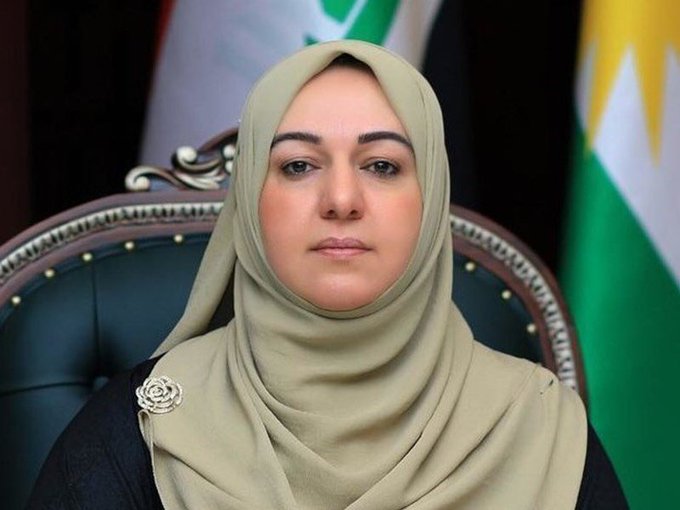

@KurdistanParl
Speaker Dr
@Rewaz_faiaq
on commemoration of Erbil twin terrorist attacks of 1st February 2004 “17 years ago terror darkened our lives when leaders & Peshmerga gathered to celebrate the holy Eid festival. This memorial comes as Kurdistan faces many challenges...”
Image


...”in the face of threats to stability of Kurdistan & Iraq, it is a basic duty to unite & speak with one voice, so that we can overcome the crises & serve our people’s highest interests. We honour the victims of 1st February 2004, and our thoughts are with their families” /End
Image


The bombing of Erbil in 2004?  The Australian Government notes:


Twin suicide bombings blamed by Kurds on local Islamist militant groups killed approximately 101 people in Erbil in February 2004 (‘Irbil bombings toll reaches 101’ 5 2004, BBC News, 3 February http://news.bbc.co.uk/2/hi/middle_east/3457065.stm – Accessed 24 June 2009 – Attachment 9). 


The death toll eventually reached 101 while those injured numbered 246.  In 2017, RUDAW issued the following.


Today?  Where are the promised elections?  Adil Abdul-Mahdi was Prime Minister of Iraq from October 25, 2018 to May 6, 2020.  No, that was not a full term.  October of 2019 (actually September 30, 2019 but the press narrative has gone with October 1, 2019) protests start in Iraq and continue to this day.  These protests against corruption, lack of jobs, lack of basic services and more eventually forced Adil to announce his resignation because his term was such a failure.  May 7, 2020, Mustafa al-Kadhimi became prime minister.  He was supposed to call for immediate elections -- his was to be a brief term.  But when he finally called for elections, it was for June of 2021.  And now?  They've been futher postponed to October.  Dana Taib Menmy (ALJAZEERA) reports:


Iraq’s leaders pushed to postpone parliamentary elections fearing public discontent would lead to their removal from power, an analyst with ties to the government says.

Prime Minister Mustafa al-Kadhimi, President Barham Salih, and Speaker of the Parliament Mohammad al-Halbusi wanted a later vote over concerns about their prospects for re-election and sought to buy time, said Mohammad Bakhtiar, a Kurdish political analyst who meets regularly with Iraqi decision-makers.

“At least two of the three leaders of Iraq who favoured early election have realised that their chances of being re-elected are minimal,” Bakhtiar said.

In a bid to delay the elections, the three Iraqi leaders met on January 12 and later with the United Nations Assistance Mission for Iraq (UNAMI) and election commission officials, he told Al Jazeera.

After a request from Iraq’s Independent High Election Commission (IHEC), the government last week announced the postponement of the country’s elections from June 6 to October 10.

Bakhtiar said it was unlikely the vote would take place in October and suggested May 2022 was more likely.


Friday, January 29, 2021

5 great tracks from the Pretenders

Jonathan Turley:

Harvard Professor Laurence Tribe was on CNN last night reassuring viewers that the Constitution clearly and unequivocally allows for the trial of a former president. In what has become a signature of Tribe’s commentary, he declared any contrary view as “stupid” while engaging in gratuitous personal insults.  I have previously written about Tribe’s past personal attacks on those who hold opposing political or legal views. While such attacks thrill many on social media, it should have no place among academics. What is more notable however is how Tribe’s views have changed since the Clinton impeachment when we testified at the impeachment hearing of constitutional experts. While he once questioned whether Bill Clinton could be impeached for a murder unrelated to his official conduct, Tribe has suggested that Trump could be impeached for a tweet alleging criminal misconduct by Barack Obama.

What is striking is Tribe’s claim that this is neither a close nor a credible question. As with his past assertions on Trump crimes, Tribe declared that the Constitution is clear and any argument against trying ex-officials is “stupid.”  Many scholars who have reached conclusions on the issue, including myself, have stressed that this is indeed a close question for them. There are a variety of opinions but most academics recognize that either interpretation is credible. For example, Professor Cass Sunstein sees strong arguments on both sides and agrees that the answer is not clear. However, he believes that the House cannot impeach a former official but the Senate can probably convict one. Tribe however has been assuring the public that the question is clear and any opposing views can be dismissed as nonsense.

While Tribe raised how my own views have changed from “not long ago” in reference to an article written 21 years ago, they have not changed nearly as much as those of Tribe in that “brief” time. Tribe’s own evolution is rarely discussed beyond conservative legal sites.  Tribe previously adopted extremely narrow legal interpretations when asked about the alleged crimes or impeachable offenses of figures like Bill Clinton. However, he has adopted broad interpretations in justifying prosecution or impeachment of Trump from issues like emoluments with the same assurance of clarity and certainty (despite opposing rulings from various courts). He was calling for impeachment from the earliest days of the Trump Administration. That includes impeachable tweets.


I'm not an academic.  So I can state this clearly: Laurence Tribe is and always will be an idiot.  He also has bad breath.  You don't have to get that close to smell it.  I've been at five dinners -- at least five -- that he was present at over the years and his breath stinks.

Carson e-mailed asking, "Have you ever done 5 tracks by the Pretenders for a post?"

Yes, several times.  Most recently here with four great tracks from PACKED (and one then-new Pretenders tracks).  But we can note them again.  Let me just do five great ones up through 1986, okay?


That way there will be less chance of my repeating myself.


1) "Kid"


2) "Talk Of The Town"


3)  "My Baby"


4) "I Hurt You"


5) "Time The Avenger"


The Pretenders really are one of the great rock bands.  It's a great band with some incredible songs.  


"Iraq snapshot" (THE COMMON ILLS):

 Friday, January 1 2021.  History is largely ignored by the press.


REUTERS notes, "Iraqi security forces have killed Abu Yaser al-Issawi, an Islamic State commander who had claimed to be the leader of the group in Iraq and its 'deputy caliph', Prime Minister Mustafa Al-Kadhimi said on Thursday."  Said?  Well he Tweeted:


We promised and fulfilled. I gave my word to pursue [ISIS] terrorists, we gave them a thundering response. Our heroic armed forces have eliminated [ISIS] commander Abu Yaser Al-Issawi as part of an intelligence-led operation. Long live Iraq and its patriotic armed forces.


And while Tweeted is more accurate than "said,"  even more accurate would be "claimed."


How many times did we hear, for example, that Abu Ayyub al-Masri was killed -- starting as far back as 2006 and he wasn't killed until 2010.  And what of the other leader, Abu Omar al-Baghdadi?  How many times was the world told he was dead? Repeatedly in 2007, as I remember, and also true, the Iraqi government insisted they had arrested him in 2009 -- even produced photos claiming it was him.  It wasn't.  He would be killed in 2010 -- in the same attack that killed al-Masri, by the way.


More to the point, those two deaths didn't really matter.  David Rising (AP) reported on those two deaths:

The U.S. and Iraq claimed a major victory against al-Qaida on Monday, saying their forces killed the terror group's two top figures in this country in an air and ground assault on their safehouse near Saddam Hussein's hometown.

Iraqi Prime Minister Nouri al-Maliki announced the killings of Abu Omar al-Baghdadi and Abu Ayyub al-Masri at a news conference and showed photographs of their bloody corpses. U.S. military officials later confirmed the deaths, which Vice President Joe Biden called a "potentially devastating blow" to al-Qaida in Iraq.

[. . .]

But Biden, President Barack Obama's point person on Iraq, said the deaths of the al-Qaida leaders underscored their overall improvement.

"The Iraqis led this operation, and it was based on intelligence the Iraqi security forces themselves developed," said Biden, who came before reporters in the White House briefing room to draw added attention to the results.


Potentially devastating blow, Joe?


No.  No, four years later, they'd not only be stronger, they'd become one of the most infamous terrorist groups in the world when they seized control of the second largest city in Iraq, Mosul.  Now terrorist groups terrorize -- hence their name.  They don't attempt to rule.  Somehow, ISIS -- not at all weakened -- managed to do what none before them could and they occupied and controlled Mosul not for days, not for weeks, not for months, for years.


And something else let's not forget, a US service member was killed in that attack.  Private 1st Class Charlie Cabay Antonio.  He was 28 years old, his friends called him Bong, he was from Kahuhi, Hawaii.  He suffered.  His family and friends suffered.


But for all of Joe's blustering -- which never included mentioning Charlie Antonio by name -- ISIS wasn't ended or even really harmed.


As Matthew Frankel noted two months later that year (2010) at Brookings:


Much has been made of Monday’s announcement of the recent killing of the number three man in all of Al Qaeda. The consensus seems to be that Mustafa Abu al-Yazid’s death will be a significant blow in the war on terror, but it’s much more likely to have no effect at all. If the past seven years in Iraq is any indication, the removal of enemy leaders has little to no impact on the group’s ability to conduct attacks against us.

The recent killing of top two leaders of Al Qaeda in Iraq, Abu Ayub al-Masri and Abu Umar al-Baghdadi, is a perfect example. “The death of these terrorists is potentially the most significant blow to Al Qaeda in Iraq since the beginning of the insurgency,” said General Ray Odierno, commander of US forces in Iraq, after the operation, which took place late last month.

The good feeling lasted less than three weeks, however. A series of devastating jihadist-led coordinated attacks across Iraq, killing over 100 people, soon reduced Odierno’s comments to mere hyperbole. And the fact that Masri’s death didn’t mean the end of Al Qaeda in Iraq shouldn’t be a surprise to anyone who has followed Iraq closely since 2003. In the past, whenever officials have pronounced upon the significance of an enemy killing, it has always proven premature.

So why hasn’t the removal of insurgent and terrorist leadership yielded more successful outcomes in Iraq? My research of twenty different high-value targeting campaigns from Algeria to Chechnya to Japan suggests that such operations have the greatest chance of success when conducted by local forces against a centralized opponent in conjunction with larger counterinsurgency operations. Until recently, American targeting efforts in Iraq failed to meet any of these criteria.

One needs to go back in time only four years to understand this dynamic firsthand. In June 2006, Abu Musab al-Zarqawi was finally killed after a months-long manhunt. “Zarqawi’s death is a severe blow to Al Qaeda. It’s a victory in the global war on terror,” President Bush said at the time. But the “victory”—such as it was—proved to be short-lived. Weekly attacks against Coalition forces climbed from 950 in the week before Zarqawi’s death to 1400 just three months later. High-profile attacks nearly doubled over the next nine months, according to U.S. military data.

And our struggles with high-value targeting operations in Iraq have hardly been limited to Sunni jihadist groups. Overemphasis on targeting operations plagued our efforts in the early years of the war. In the months following the fall of Saddam Hussein’s regime, U.S. forces made finding the fugitive leader, his sons, and other holdouts from the infamous “deck of cards” their top priority, ignoring the fact that anti-occupation sentiment had spread to tribal and non-Baathist Sunni figures and spawned a broad decentralized insurgency.

Poorly-conceived and poorly-managed targeting efforts added fuel to the fire. Brazen midnight US military raids sometimes led to the capture of an insurgent, but often created a new generation of enemies as a result of rough tactics and lack of sensitivity towards local customs.

Furthermore, since the Sunni insurgency was decentralized, with local commanders holding large amounts of autonomy, the targeting campaign did little to stem the levels of violence. The eventual capture of Saddam, and the deaths of his sons, had no effect on the growing insurgency. Instead, it took a combination of persistent attacks by Shia militias and the rise of the Anbar Awakening to defeat the bulk of the Sunni insurgency.

History has shown that a military force that fights insurgents far from its home turf, like American soldiers have done in Iraq, will have a severe disadvantage because troops don’t understand the local cultural dynamics and networks. Despite our technological superiority, the United States often falls short in the area of local intelligence collection, leading to poor target selection and unnecessary collateral damage as we have seen in both Iraq and Afghanistan.


The press, yet again, plays dumb today and treats a claim as proof and treats the claim as significant.  There's no historical evidence to suggest that the death, if it took place, is in any way significant or that it will alter the trajectory of ISIS in any significant manner.


But don't let facts, reality or the examples from the past interrupt the nonsensical ravings, right?


And don't let the claim force you to note the executions in Iraq.  MEMO notes:


Executions are imminent in Iraq following the president's approval of the death sentences for hundreds of Sunni prisoners in response to the suicide bombings in the capital Baghdad last week, the Arab Organisation for Human Rights in the UK (AOHR UK) has warned.

The execution of 340 civilians arrested and detained under Article 4 of the country's Terrorism Law was approved two days after the bomb blasts, in which 32 were killed and for which [ISIS] claimed responsibility.

Three detainees were executed last Monday in the Nasiriyah Central Prison. According to AOHR UK, the condemned men came from the provinces of Nineveh, Anbar. Notably, all three were Sunni Muslims, raising concerns that their execution was based on sectarian grounds.


Mosul.  The city was destroyed by bombings carried out by ISIS, the US government and the Iraqi government.  That US and Iraq were 'liberating' the city.  All this time later, Mosul remains in ruins.  AFP reports on one section of the city:

Mosul's Old City still lies in ruins three years after intense fighting drove out Islamic State jihadists. Many Mosul residents long waited for compensation or rebuilding -- in vain, as Iraq remains mired in political and economic crisis, reported AFP. With rebuilding unlikely and Iraq's economy in tailspin, homeowners are desperate to sell. But many who lived through the horrors of IS rule there are now unable to find buyers for their properties in what still resembles a warzone.


A few days ago, THE NEW ARAB Tweeted:


"#Iraq's second largest city remains scarred by the war against the Islamic State. Although peace has returned, much of Mosul still lies in ruins" writes Sylvain Mercadier


Last month, Samya Kullab (AP) wrote:


The U.N. has estimated that over 8,000 Mosul homes were destroyed in intense airstrikes to root out IS. The nine-month operation left at least 9,000 dead, according to an AP investigation.

Memories of the group’s brutality still haunt locals, who remember a time when the city squares were used for the public beheading of those who dared violate the militants' rules.

The Old City on the west bank of the Tigris River, once the jewel of Mosul, remains in ruins even as newer parts of the city have seen a cautious recovery. The revival, the residents say, is mostly their own doing.

“I didn’t see a single dollar from the government,” said Ahmed Sarhan, who runs a family coffee business.


There are many problems with what Kullab wrote -- not reported, typed.  Including where did the reconstruction money go?  


Recently, the last seven or so months, the Iraqi government has claimed (lied) that they diverted it to COVID relief.  Again, that's a lie.  But if they had diverted it, it still wouldn't explain where all the money was prior to the COVID emerging on the world stage in February of last year.  Mosul should have been rebuilt long ago and it is an example of the ongoing corruption of the Iraqi government that continues year after year, regardless of which coward who fled Iraq is installed as prime minister.  


In 2020, AFP noted, "Iraq gathered $30 billion in pledges from international donors in Kuwait in 2018 to rebuild, but virtually none of the funds have been disbursed."  30 billion.  And yet no real rebuilding -- the rebuilding that has taken place has been done by the United Nations.


$30 billion.  Wasted.  A corrupt government that pockets the money -- over and over, we see this.


Turning to the US, David Sirota has a DAILY POSTER report that NEWSWEEK is part of:


On January 4, Joe Biden made an unequivocal pledge, telling voters that by electing Democrats to Georgia's senate seats, "you can make an immediate difference in your own lives, the lives of people all across this country because their election will put an end to the block in Washington on that $2,000 stimulus check, that money that will go out the door immediately to people who are in real trouble."

Less than four weeks later:

  • Biden is pushing $1,400 checks, rather than using his election mandate to demand new, full $2,000 checks.
  • Democrats are now suggesting that it could take at least until March to even pass the legislation, even as the economic crisis worsens.
  • Biden is now responding to threats of Republican obstructionism by floating the idea of reducing the number of people who would even get the checks. "He is open to negotiating the eligibility requirements of his proposed $1,400 COVID stimulus check, a nod to lawmakers who have said they should be more targeted," reported Reuters.
  • The signals of retreat are happening even as new polling data show that the original promise for a full $2,000 stimulus check is wildly popular.


Feel familiar? We've gotten into a flux-capacitor-powered DeLorean, flown back in time and dropped ourselves into 2009.

Back then, Barack Obama and Biden had gotten themselves elected in the middle of an economic crisis after promising to pass a public health insurance option. It was a promise as clear and explicit as the $2,000 checks promise is today—their platform was explicit in pledging that "any American will have the opportunity to enroll in the new public plan."

But then over the course of the year, as Republicans in the congressional minority kicked and screamed, the administration ever so gradually started backing down, rather than using the election mandate to try to shame the GOP into submission.

By the middle of the year, Obama said: "The public option, whether we have it or we don't have it, is not the entirety of health care reform." His Health and Human Services secretary said that it was "not the essential element" of health care reform.

By the winter, Obama lied, insisting "I didn't campaign on a public option."

And then by 2010, the Obama White House had killed the plan, and Senate Democrats refused to even bring it up for a floor vote when they had the chance. Soon after, voters delivered what Obama called a "shellacking" in the midterm election, effectively foreclosing on the possibility of transformative change during Obama's presidency.


At WSWS, Bill Van Auken notes that Joe's already warring with Iran:


Meanwhile, an Iranian government spokesman appealed directly to the Biden administration to lift sanctions that have restricted the country’s ability to import vaccines needed to combat the COVID-19 pandemic, which has hit Iran harder than any other country in the region, with 1.4 million reported cases and nearly 60,000 reported deaths.

“Since [Biden’s] administration claims not to be anti-science like the previous one...one expects it to free the transfer of Iran’s own foreign exchange resources to fight the coronavirus and for health and food, and lift banking sanctions quickly,” government spokesman Ali Rabiei told state television.

With its appeal for “unity” with the Republican Party, the Biden administration has little stomach for a swift and sharp reversal of the “maximum pressure” campaign imposed by Trump. Leading right-wing congressional Democrats, including Senator Robert Menendez, the incoming chairman of the Senate Committee on Foreign Relations, have also opposed any letup of US aggression against Iran.

Biden has also pledged to “engage” with Israel before taking any steps to change the current “maximum pressure” regime against Iran, while Blinken has repeatedly stated that the new administration views Israel’s security as “sacrosanct.”

Tel Aviv has not only opposed any US return to the JCPOA but has threatened to militarily attack Iran and its nuclear facilities in response. This was expressed most directly by the new chief of staff of the Israel Defense Forces (IDF), Lt. Gen. Aviv Kochavi, who gave a bellicose speech on Tuesday, declaring a return to the Iran nuclear deal an “intolerable threat” to Israel. He said that “anything that is similar to the current deal is a bad thing, and we cannot allow it,” adding that he had ordered the IDF to prepare new “operative plans” for attacking Iran.


The following sites updated: