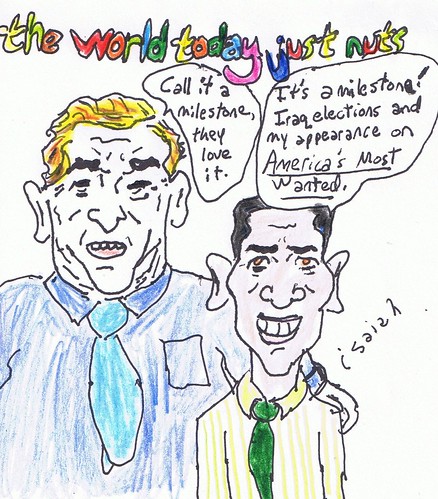
There's problems, Billy Quig says, right here in River City!
Problems with the government. But he never names names does he? Can't call out Sister Baracka. Bill Quigley worthless and America doesn't have time for him to find his spine. Just ignore CCR. That's what I intend to do from now on. They're cowards pure and simple. "When Silence Is Betrayal" is the name CounterPunch gives to Quigy's bad piece. Uh, you mean like his silence when it comes to holding Barack accountable?
"Calling All Rebels" (Chris Hedges, Information Clearing House):
It is hard to see how this can be prevented. The engines of social reform are dead. Liberal apologists, who long ago should have abandoned the Democratic Party, continue to make pathetic appeals to a tone-deaf corporate state and Barack Obama while the working and middle class are ruthlessly stripped of rights, income and jobs. Liberals self-righteously condemn imperial wars and the looting of the U.S. Treasury by Wall Street but not the Democrats who are responsible. And the longer the liberal class dithers and speaks in the bloodless language of policies and programs, the more hated and irrelevant it becomes. No one has discredited American liberalism more than liberals themselves. And I do not hold out any hope for their reform. We have entered an age in which, as William Butler Yeats wrote, "the best lack all conviction and the worst are full of passionate intensity."
"If we end up with violence in the streets on a large scale, not random riots, but insurrection and things break down, there will be a coup d'état from the right," Johnston said. "We have already had an economic coup d'état. It will not take much to go further."
How do we resist? How, if this descent is inevitable, as I believe it is, do we fight back? Why should we resist at all? Why not give in to cynicism and despair? Why not carve out as comfortable a niche as possible within the embrace of the corporate state and spend our lives attempting to satiate our private needs? The power elite, including most of those who graduate from our top universities and our liberal and intellectual classes, have sold out for personal comfort. Why not us?
See how someone with a spine does it? Chris Hedges doesn't pull punches. He doesn't write around the problem or make excuses for the man holding the highest office in the US. Chris Hedges doesn't identify up, he is of the people. CCR seems to have forgotten how to do that. It's disgraceful.
"TV: Why?" (Ava and C.I., The Third Estate Sunday Review):
Sarah's survived a bad marriage and she her two children have the street or her parents' home. Brother Adam and his wife Kristina (Monica Potter) are dealing with their son being diagnosed with Asperger Syndrome. These are serious issues and allow the moralizing to be turned down a bit. As a friend who's worked on "too many" Ron Howard projects puts it, "Moralizing really comes from the people with the least problems and the least connection to reality." To which we add, "True that."
Brother Crosby's storylines are nothing but moralizing. Cluck with the parents over Crosby's inability to commit, over his decision to have a baby with his 'love' if they're still together in three years (agreed to via haggling as if they were attempting to get a rug for wholesale). Shake your head and sigh as it turns out Crosby's already a father from a previous relationship. Or maybe marvel over that messed up Julia. Married to Sam (Joel Graham -- doing heavy lifting in an underwritten role) whom their child prefers to Julia. Now that could cause a few worries, granted. But it really takes idiots -- idiots knowing damn little about raising a child -- to write a family dinner table scene where a woman is consumed with doubts about her mothering abilities because her child would prefer her father cut her meat and willing to, in front of her parents and her siblings and their children, enter into a power struggle with her child over the issue. In the real world, Jason Katims and Becky Hartman-Edwards, a mother or father given a break from cutting meat and able to speak with their siblings and other adults sees it as a welcome vacation and doesn't look the gifthorse in the mouth.
While Crosby is supposed to have us clucking over his alleged 'irresponsibility,' Julia's nothing but her own cluck-clucking machine. Was she too rude? Was the there for her daughter? Was she there for her job? Was she there for her husband? And on top of all of that (time consuming) worrying, there's the Ron Howard glistening answer of "Yes, she's a failure." That's true of any Ron Howard project. It's most evident in Parenthood because that film had a more difficult time sidelining women since they didn't have fish tails attached and the men weren't able to escape to the no-women allowed Mission Control Center in Houston.
If there's a reason to watch the program, it's to enjoy what Graham, Krause and Christensen create together -- something more realistic than in any of their big 'showy' solo scenes. If Parenthood had any guts, it would stop trying to ape a film most people have forgotten and invest everything in exploring the relationship of the three siblings. That's the heart of the show and too bad everyone involved behind the cameras seems determined to destroy it.
That will be are artistic highlight. I haven't seen Parenthood. (The new TV show.) Sunny's husband has and he loved Ava and C.I.'s review.
"Iraq snapshot" (The Common Ills);
Monday, March 10, 2010. Chaos and violence continue, counting the votes continues, the US military continues to attempt to punish a soldier for the 'crime' of rapping, and more.
Iraq completed elections over the weekend. The latest episode of Inside Iraq (Al Jazeera) began airing Friday. Jasim al-Azawi interviewed Iyad Allawi.
Jasim al-Azawi: I am delighted now to welcome from Baghdad, Iraq's former prime minister and the leader of the National Iraq Movement, Iyad Allawi. Iyad Allawi, welcome to Inside Iraq.
Iyad Allawi: Thank you.
Jasim al-Azawi: Let me ask you about the description and the adjective that have been used for this election. "This is going to be decisive. This is going to be historical. This is going to change the destiny of Iraq." That is exactly what they said about the 2005 election. So why should we believe that this election is going to change the misery of Iraqis?
Iyad Allawi: We hope it will change the misery of Iraqis. This election is going to be a milestone. And the -- and the movement of Iraq forward in history. And I think the withdrawal of the American forces, the draw-down which is starting soon, the Constitutional issues that need to be discussed, which are quite hot now on disputed areas and territories and certain provinces in Iraq. The overall situation in the Middle East as a whole is not encouraging. Those are some indications why this election is going to be an important and significant election for this country.
Jasim al-Azawi: Yet cynics say, "The players are the same. The Constitution remains the same. The political game is the same." So why should we believe there is a possibility for a movement forward?
Iyad Allawi: The United States is -- as you know -- going to-to start the drawdown. It's going to be ready for the pulling out of Iraq. And indeed the Iraqis need to co-exist and they need to create a government which is worthy of Iraq and can implement the security and have the security prevail, can provide services to the people that have been denied the proper services for a -- for a human beings and to increase the revenues of the Iraqi family. And a very wealthy nation, we'll have millions of Iraqi refugees outside and millions are displaced and so we hope that these elections will bring government that can undertake these important steps taking Iraq forward.
Jasim al-Azawi: Let us talk about you, Iyad Allawi. For the past five years, you've been working very hard to build this powerful coalition that is challenging the current prime minister Nouri al-Maliki. You are secular. You believe in modern liberalism. You don't believe in sectarian politics. You managed to pull many people from different parts of life representing many different ideologies. What you have right now, is it enough to beat al-Maliki?
Iyad Allawi: Well it's not a matter of beating al-Maliki. There is nothing personal with al-Maliki or anybody else. We have clashes with programs. We think that the only way for Iraq to proceed forward is to get away from sectarianism. It's to build national reconciliation. It's to move in a modern way of management and to have Iraq for all Iraqis -- regardless of their ethnic, their religious, their sects, their background. And that's where we differ with some -- with some groups including the group on the slate of Mr. al-Maliki. And we hope that we can achieve our goals because we have been witnessing a withdrawal of people from sectarianism, more people are embarking on national reconciliation and they cannot tolerate anymore politicizing of religion in this country. Religion is sacred and is respected and we respect religion. It's part of our identity. But to politicize the sects and the religion is not acceptable. That's why we hope that we will defeat other groups who believe in sectarianism and do not believe in national reconciliation.
[. . .]
Jasim al-Azawi: In the last two minutes left to me, I'm going to ask you two questions. First, how fearful are you that the election will be riddled with fraud? You -- you are on record saying that if you come to the conclusion that fraud has reached a certain level, that you are going to boycott the entire political process.
Iyad Allawi: Well, you know, Jasim, we have seen fraudulent elections last time. Now the environment is not encouraging -- the political environment. There are already problems, by the way, in the elections which have started abroad. There is reduction of the polling stations which is not compatible with the number of Iraqis willing to vote. This has occurred in Syria, this has occurred in the UAE and it is unacceptable measure. However, we are willing to accept a little bit of fraud in the elections because people trying to hang to power will try to make whatever is necessary, whatever it takes. But if this becomes out of proportion, we will go back to the report of the Security Council which was produced two weeks ago.
Jasim al-Azawi: Yes.
Iyad Allawi: About calling for inclusive, fraud free elections in Iraq and we are going to decide in the Iraqiya what the position is going to be because we cannot have democracy raped in the way it is being. We cannot have the political process being diverted.
Jasim al-Azawi: Final ---
Iyad Allawi: And we will strive and do our best.
Jasim al-Azawi: Final question Iyad Allawi, the Iraqi vice president in an interview with al Hayat newspaper, he said, "If al-Maliki loses and he loses big, he just might engineer a miltary coup d'etat. Do you share his concern?
Iyad Allawi: All the indications are not comfortable -- are not making us feel comfortable. And I think my brother Tareq al-Hamashi does have some concerns -- which I share some of his concerns. But I will tell you this: that the Iraqi people are not going to allow anybody to-to take their world and to take their destiny and the Iraqi people are going to be proud of this. They have been proud of their history. And they are and they will ensure that nobody is going to steal them from their right and from their freedom. Whoever this person may be. Whether it's me or anybody else. Iraq is for Iraqis. No doubt about this. Maybe we are now passing through a difficult stage but I'm sure that the Iraqi people will victor again ["one day" or "at the end of the day"].
Omar Chatriwala (Voices From Iraq, Al Jazeera) offers video of Iraqis sharing their thoughts on the elections and we'll note the following (there are more speakers than we're noting -- we are noting every woman in the videos).
Iraqi Man: I have been here since five o'clock in the morning. I have not been able to find my name on the list. I've come back a few times but still can't find my name. Yes, my vote counts. Many voters have left without casting their vote. Why is my voice not heard?
Iraqi Woman: We look forward to seeing more freedoms and democracy in Iraq and we hope the right man is put in the right place I supported and voted for the Iraq bloc led by Iyad Allawi. He's a secular politician and is serving the country. Religious blocs are no longer popular in Iraq. Iyad Allawi is a popular politician who loves his country.
Iraqi Boy (under ten years old): I hope that the previous government will not come back. I look forward to a new one. I look for a change. I want stability and security. We wish to see things we did not see before. All the previous politicians did not deliver. The open list allows the voters to elect the candidates that they trust
Iraqi Woman (holding young child): I will not vote. The previous government did not deliver anything. What should I expect from the coming one. I do not think that we would benefit if we elect any candidate. We look for employment. I have been working for three years on temporary contracts and was promised a permanent job with the last election.
Iraqi Woman: We hope that Iraqi people will be able to live in comfort and security. Simply speaking, we the Iraqis in general have never felt safe or secure.
Young Iraqi Man: No, I will not vote in the coming elections. I've been living in a block of flats owned by the state. I've been unemployed with no job for years I have applied many times to join the National Guard. I cannot accept that Iraq is rich in oil but we work as servants to the Americans and others. Where is the Iraqi president? What is he offering? What has he delivered to us?
Martin Chulov (Guardian) also offered some Iraqi voices:
"We got up at 7am and were planning to vote. Next thing. I was digging my wife out of the rubble. She is eight months pregnant and both her legs are broken. My children are not badly wounded but look at their eyes. We don't have a future, we want to leave. We need to go somewhere else to secure anything like a future. I hope my family can stay in the hospital. This is the only place we have."
--Zuhair Hikmat, 40, at the Yarmuk hospital in central Baghdad
"I left my house to go to the election centre at 7am. I walked near a pile of rubbish and the bomb went off. I think this situation will deteriorate again. I am unemployed and they were going to pay me for one day's work. Now I have nothing." --Salim Turki Najim, 45, from the west Baghdad neighbourhood of al-Hurriya
Voting ended in Iraq yesterday. Early voting took place prior to Sunday. Sahar Issa (McClatchy Newspapers) reported on Sunday, "More than one hundred attacks upon civilians with small home made bombs and 13 roadside bombs exploded in Baghdad alone, Sunday that resulted in at least 38 civilians killed and around 90 others injured on Elections Day, March 7." Reuters added a Falljua mortar attack which left six people injured, a Mahmudiya mortar attack claimed 1 life and left eleven people injured, a Yusufiya mortar attack that injured one person, a Mosul roadside bombing which left two people injured, a Mosul grenade attack which left seven people injured, and a combination of Iraqi forces, US forces and Kurdish peshmerga shot a Mosul council member and two bodyguards with the shooting being termed "a misunderstanding." This is what US Preisdent Barack Obama calls "a milestone"? It gets worse. Anne Gearan (AP) reports US Secretary of Defense Robert Gates stated of Sunday, "All in all, a good day for the Iraqis and for all of us." Including the dead? Far more common sense was shown by the top US Commander in Iraq. AFP reports that he was shown a new cover of Newsweek featuring George W. Bush with the "MISSION ACCOMPLISHED" banner and he replied, "I don't think we'll know whether we were successful or not in Iraq until three to five or 10 years down the road." Meanwhile China Daily notes that "the American military presence so prominent in 2005 was limited on election day to helicopters buzzing over head as a massive deployment of Iraqi forces took the lead on the ground."
There are no results yet and the only 'poll' on voting is a poll commissioned by Nouri al-Maliki's government which really doesn't go to "independence." Andrew Lee Butters (Time magazine) explains, "With thousands of polling places using paper ballots, and a ban on vehicle travel and other security measures for election day itself, the exact figures on voter turnout, as well as the results themselves, won't be known for days." Here's another example, Elizabeth Palmer CBS News (link has text and video) explains it will be days before results are known and that there were 10,000 polling stations in Iraq. Ben Knight (Australia's ABC) adds, "Voting in Iraq's parliamentary election has finished and as the long process of counting the votes begins, Iraqis have celebrated their national elections. Counting of the votes is already underway and it is expected to be some days before official results are announced, but there is still danger that the militants who tried to derail yesterday's vote will attack again." Caroline Alexander and Daniel Williams (Bloomberg News)also note, "Vote-counting is under way in Iraq, where citizens defied bombs and mortar shells to get to the polls in yesterday's national parliamentary election. They probably will face months of haggling by fractious leaders over the formation of a coalition government." Not only are votes still to be counted, Karen Brown (CBS News -- link has text and video) reports that the UN "says ballots will be counted twice and any polling station with significant discrepancies will be audited immediately." Rather basic but Quil Lawrence and Steve Inskeep (NPR's Morning Edition) have made it necessary that we be very remedial on this topic. Marc Lynch (Foreign Policy) offers some advice NPR should consider heeding:
First, don't rush to speculate on who won or what it means. All the Iraqi lists are loudly claiming victory, but the truth is that no official (or even unofficial) results yet seem to exist. The anecdotal evidence still points to the pre-election speculation -- Maliki on top, Allawi a strong second, the ISCI/Sadrist Shi'a list fading -- but it's only anecdotal. It does make a difference who comes out on top, and who becomes Prime Minister - Maliki and Allawi, for instance, would have very different styles, as would Chalabi or some such. But at the same time, there's almost certainly going to be a coalition of some kind (fully inclusive or otherwise) and the differences probably won't be as stark as some people expect.
McClatchy live blogged the elections (also click here). RTT News reports that the percentage of non-police, non-defense, non-hospitalized and non-imprisoned Iraqis voting in Iraq "has been officially confirmed as 62.5." This would mean that, as Free Speech Radio News pointed out today, the percentage voting was "lower than the 76 percent that turned out in 2005."
Reuters drops back to yesterday to note 1 Iraqi woman killed and thirty-six people injured in Mosul and six injured in Kirkuk. These are Sunday deaths and injuries in addition to the ones reported yesterday.
In London today, the Iraq Inquiry continues with Bill Jeffrey (MOD Permanent Secretary from 2005 to 2009) and David Miliband testifying. As disclosed before, I know and like David. In April of 1999, then-prime minister Tony Blair gave what was considered to be one of the defining speeches of his career, one that would be billed as "The Blair Doctrine." The NewsHour (PBS) covered it and reproduced it in whole and, from it, we'll note:
We are all internationalists now, whether we like it or not We cannot refuse to participate in global markets if we want to prosper. We cannot ignore new political ideas in other counties if we want to innovate. We cannot turn our backs on conflicts and the violation of human rights within other countries if we want still to be secure.
On the eve of a new Millennium we are now in a new world. We need new rules for international co-operation and new ways of organising our international institutions.
After World War II, we developed a series of international institutions to cope with the strains of rebuilding a devastated world: Bretton Woods, the United Nations, NATO, the FU. Even then, it was clear that the world was becoming increasingly interdependent. The doctrine of isolationism had been a casualty of a world war, where the United States and others finally realised standing aside was not an option.
Today the impulse towards interdependence is immeasurably greater. We are witnessing the beginnings of a new doctrine of international community. By this I mean the explicit recognition that today more than ever before we are mutually dependent, that national interest is to a significant extent governed by international collaboration and that we need a clear and coherent debate as to the direction this doctrine takes us in each field of international endeavour. Just as within domestic politics, the notion of community - the belief that partnership and co-operation are essential to advance self-interest - is coming into its own; so it needs to find its own international echo. Global financial markets, the global environment, global security and disarmament issues: none of these can he solved without intense international co-operation.
In that speech, you can find the basis for many of David Miliband's statements today -- such as these following.
David Miliband: There is an argument about whether or not medium-seized countries should think of themselves as global palyers and I think it is an argument that is going to become more and more pressing in the months and years ahead, because of the temptations for politicians, never mind those concerned with the finances, to rein us in, and I think that ask a lot of those whom we put into harm's way, and I think that the way in which the Prime Minister [Gordon Brown's testimony last week] summed up the -- not just the gratitude but the respect and the sadness, the profound sadness that is felt by people in government, was absolutely right.
But, equally, we mustn't be a country that turns our back on the world, because, if we do, because of the hard decisions that are faced with, we will be much poorer in all senses of that term.
Nearly three-fourths of the way into his testimony, David Miliband declared:
I can honestly say to you, thirdly, that in the Arab world today, I don't believe that the Iraq decisions have undermined our relationships and our abilities to do business. Actually, some of our ambassadors say that we are in a strong position in various ways at the moment.
And we're going to pair that with another section which In The News reported on earlier today:Mr Miliband, who was a junior minister at the time of the invasion, said: "The authority of the UN, I think, would have been severely dented if the hypothetical case that you are putting - that we had marched to the top of the hill of pressure and then walked down again without disarming Saddam - then I think that would have been really quite damaging for any of the multilateral aims that we have that need to be pursued through the UN."The fact that the argument was made very clearly, notably in this country, that feeble follow-through undermines strong words, I think, is significant." That's nonsense and laughable. For the purposes of this discussion, people need to leave their opinions of George W. Bush and others at the door. (I loathe Bully Boy Bush.) David Miliband is making a case that can be tosses around in poli sci, especially in international relations courses. During the Cold War, the global system was thought to be bi-polar -- not a medical diagnosis. It was thought that the US and the USSR were the two centers of power, the poles, and that all others went to one or the other poll (or was neutral). The USSR collapsed and what some thought might emerge was a multi-polar system but what a number believe (especially many in the US) is that a uni-polar system developed with the US as the only power/pole.
If you follow that, let's bring Bully Boy Bush into the equation. He made the infamous "Axis of Evil" speech prior to the Iraq War and statements of 'you're either with or us against us,' and dozens and dozens of other bellicose remarks. As many in the US felt, he looked nuts. He looked crazy. He looked irrational.
An actor on the international stage who appears irrational (regardless of whether they are irrational or not) keeps the system of balance, keeps everyone guessing and can have a sort of power. He or she can frighten others. The fear factor can result in his/her country getting its way. Muammar al-Gaddafi (Libya) is someone often labeled as an "irrational actor" and he's worked that for years. To his benefit in some cases but, as past air strikes also demonstrate, to his (and his country's) misfortune. Because when they don't know what you will do and won't do, when you're that 'irrational,' often times "reason" isn't something they want to try with you.
The danger in Bully Boy Bush was not only the wars he started but that other countries might begin to worry that he truly was crazy (and maybe he was) and feel that they needed to 'address' the problem. Because he was the leader of the United States, that day didn't come. But this "He's mad! He's crazy!" fear can result in a level of respect. It's not necessarily earned respect and it's not necessarily something that helps bring about peace, but everyone wants to avoid angering Crazy.
So US diplomats might observe that some foreign powers -- due to Bush's insantiy -- interact easier these days. That may be the case. I don't know that it is, I don't know that it's not. But we're talking political theory here on the balance of powers and the actors involved.
That's Bush. That's not Blair. There is no way in the world (and I say that as someone who knows David) that Miliband meant what he said. He's too smart for that. Blair was not seen as the 'crazy.' He was seen as "The Poodle." That's not an empowering name. Nor did England's actions look impressive on the fear scale. What the world saw was that if George W. Bush took some form of action (starting an illegal war, in this case), The Poodle would "tag along."
The "tag along" is not a power position. Not only is it not a "power position," it is, in fact, a weak position. Bush is playing the Bully and Blair's playing The Poodle and you want to strike back at the West. Do you with go after Crazy, Insane? You might. But often you will feel safer going after the "tag along." You're striking them -- the perceived weaker of the two parties -- and, due to their being an ally with Crazy, you're getting to strike Crazy via proximity.
Point (and I'm oversimplifying the theory to get it across), England is actually in a worse position globally then it was before the start of the Iraq War if you buy the balance of powers arguments and that power is a zero sum game and all the other little beliefs that go with those war lord theories. Why? Because England stuck by the Big Bully but England didn't prove itself to be a Big Bully. If the theory is true (I'm not promoting the theory -- but David is promoting a version of the theory -- one that he knows is incorrect) then England is at greater risk today than it's ever been. (And that's even more true with Labour still in charge of the UK government. The US Bully is gone. Replaced with someone from the opposition party. That may -- or may not -- dilute some of the world hatred.) That would mean that the Iraq War -- if the theory holds -- has made the British more apt to be kidnapped and targeted outside their own country.
Kidnapped. A large number of British citizens have been kidnapped during the Iraq War. When the British government got involved, the kidnapped tended to turn into corpses. The governments of Italy, Spain, the US and others were often able to strike bargains of some form or another. Not so with England. (Don't confuse, for example, the work of the Telegraph of London to free one of their reporters with the work of the British government. That was the newspaper's work, not the government's.)
Committee Member Usha Prashar: My final question is about hostages, because a particular challenge has been the risk to UK nationals in Iraq being taken as hostages. Looking back, are there lessons to be learned as to how we deal with hostages.
David Miliband: Look, I'm very glad you mentioned that, because I notice at the end of all these sessions you say, "Is there anything else you'd like to say?" and I was going to raise this issue. So I do thank you for raising this. I think all of the witnesses have paid tribute to the work of our armed forces, and the devastation for the nearly 200 families who have lost a loved one here [No, David, you are incorrect, all the witnesses did not do that], never mind been injured, is profound, and all of us think about that, never mind the very significant number of Iraqis who have lost their lives, but there is also the case of the five hostages, which has weighed significantly on me in terms of time and effort, but not one hundredth or thousandth as much as it has weighed on the families. You know the situation, that one of the five hostages has returned, thankfully alive, but three have been killed, and there is the continuing agony in respect of Alan McMenemy, and that is something I think it is important that it is on the record in a case like this. I know that Foreign Office staff, but also staff from other government departments, never mind Iraqis, have really strained every sinew in trying to get a successful rescue or release of these five innocent people and it is the human cases in a way that bring out the -- some of the big discussions that one can have about this. We have a very, very clear policy, that we will not make substantive concessions to hostage-takers and I don't think that a -- any lesson of this affair should be that we should change that policy. I think that we have worked very, very hard in terms of our engagment with all those -- and Imphasise all those -- who might have a way of helping exert pressure or incentive for release, and tragically, in three, I think four, of the cases it has not been successful.
Let's stop him. (Prashar will in a moment, anyway.) Alec Maclachlan, Jason Crewswell, Alan McMenemy, Peter Moore and Jason Swindelhurst were kidnapped in Baghdad May 29, 2007. Only Peter Moore has been returned alive. The other three were returned in corpse state and what's happened to Alan McMenemy remains unknown. To get the release of Moore (and the corpses), the US had to let the leader of the League of the Righteous out of US prison in Iraq, release his brother as well. When this took place -- and David denied the deal publicly at the time -- the UK 'secured' the release of Moore. David wants to insist that they don't make concessions? Okay, I guess he meant that they just ask their allies to?
Prashar stops him to point out she hasn't heard one word from him on a lesson learned. He replied that it was never difficult to figure out who took a hostage, just where the hostage was kept. Prashar noted he claimed that his office kept in touch with the families of hostages, "but when we have talked to the families of hostages, they have complained to us about the lack of information in the context of the FCO. Have you any comments on that?" David Miliband wanted details and went on to say that if those family members "have ideas or complaints, then we want to know about them" (the quote continues, we're not interested) which may have been the most laughable moment. Will anyone notice that he rested on the (US) success and avoided mentioning anyone like Margaret Hassan who was kidnapped and murdered?
And I wonder what her family thought of his ignoring her. Margaret Hassan's kidnapping was a worldwide event. Her loss unimaginable to anyone but her family but the news of her kidnapping was shocking and the entire world watched.
In the US, Ms. magazine is increasing their online presence by starting a new blog:
Ms. Magazine Launches the New Ms. Blog
On this International Women's Day, March 8th, Ms. magazine - the flagship feminist publication - launches the Ms. Blog, showcasing the sharp writing and informed opinions of a community of feminist bloggers from around the nation and the globe.
The Ms. Blog will be a hub for exchange, collaboration and discussion, introducing fresh perspectives on national and global politics, culture, media, health, law and life.
The range, diversity and quality of bloggers is already exceptional: In the months leading up to this historic launch, Ms. was inundated with blogging offers from academics, activists and journalists. There are contributors from seven countries and counting, and the overall contributors' roster ranges from well-known names to up-and-coming writers and thinkers. We at Ms. are thrilled about the prospects of intercultural and intergenerational exchange.
Among the bloggers who have signed on to this exciting new project are novelist Diana Abu-Jaber, sexuality author Hanne Blank, L.A. journalist and scholar Lynell George, health activist/author Paula Kamen, masculinity critic/scholar Michael Kimmel, environmental journalist Sonia Shah, feminist writer Deborah Siegel, sociologist Shira Tarrant, media scholar Ebony Utley, memoirist Aimee Liu, Chicana activist and "mommyblogger" Veronica Arreola, Moroccan feminist scholar Fatima Sadiqi, gender and global development expert Lina Abirafeh (reporting from Haiti), Iraqi activist Yanar Mohammed, Muslim feminist Melody Moezzi, Chicana author Michele Serros and law professor Pamela Bridgewater.
Recognizing that no aspect of life is immune from gender politics, the Ms. Blog will address the intersectionality of gender with race, class, nationality and sexuality. And although there will be personal talk on the Ms. Blog, it will always be with the recognition that the personal is political.
Ms. executive editor Katherine Spillar is available for interviews about the new Ms. blog.
Contact: Jessica Stites
P. 310-556-2515 Email: jstites@msmagazine.com
We last noted Marc Hall in the March 3rd snapshot. He was being held in jail and due to be transported to Iraq for an Article 32 hearing and a court-martial. By holding the hearings in Iraq, the military will deprive Marc of many of the witnesses he needs to make his case. For those who don't know the story, Marc is facing punishment, possible imprisonment and worse for the 'crime' of rapping. Iraq Veterans Against the War has posted a letter from Marc:
IVAW is partnering with Courage to Resist to raise awareness and funds for Marc Hall.
Please donate now: https://co.clickandpledge.com/sp/d1/default.aspx?wid=30624
Letter from Army SPC Marc Hall, February 20, 1010:
I never thought that I would join the Army only to one day be incarcerated by the Army. I have never been to jail in my life, until now. The Army is charging me with Article 134 of the Uniform Code of Military Justice, "communicating threats" towards my chain of command. Yet I was only communicating how I felt about what I have experienced in the Army and how I felt about the Army's "Stop-loss" policy. That policy meant that I could not leave the Army when I was supposed to, and after I had already served in Iraq for 14 months.
I guess this all started with a hardcore "rap" song I made about the Army's very unpopular "Stop-loss" policy back in July 2009. Like any "rap" or rock song, I was expressing my freedom of expression under the US Constitution. Being that the Army's "Stop-loss" policy was a Pentagon decision from what I had heard on the news, I decided to send a copy of my song directly to the Pentagon.
I don't know if anyone at the Pentagon listened to my song, but somebody in Washington DC mailed the package back to my chain of command. My First Sergeant called me in to his office to discuss it. I explained that the rap was a freedom of expression thing. And that it was not a physical threat, nor any kind of threat whatsoever. I explained that it was just hip hop. He told me that he kind of liked the song, that it sounded good.
iraq
al jazeera
inside iraq
jasim al-azzawi
time magazineandrew lee buttersalsumaria tvcbs newselizabeth palmerabcben knightbloomberg newscaroline alexanderdaniel williamskaren brown
the guardian
martin chulov
ms.ms. magazine
iraq veterans against the war
Monday, March 10, 2010. Chaos and violence continue, counting the votes continues, the US military continues to attempt to punish a soldier for the 'crime' of rapping, and more.
Iraq completed elections over the weekend. The latest episode of Inside Iraq (Al Jazeera) began airing Friday. Jasim al-Azawi interviewed Iyad Allawi.
Jasim al-Azawi: I am delighted now to welcome from Baghdad, Iraq's former prime minister and the leader of the National Iraq Movement, Iyad Allawi. Iyad Allawi, welcome to Inside Iraq.
Iyad Allawi: Thank you.
Jasim al-Azawi: Let me ask you about the description and the adjective that have been used for this election. "This is going to be decisive. This is going to be historical. This is going to change the destiny of Iraq." That is exactly what they said about the 2005 election. So why should we believe that this election is going to change the misery of Iraqis?
Iyad Allawi: We hope it will change the misery of Iraqis. This election is going to be a milestone. And the -- and the movement of Iraq forward in history. And I think the withdrawal of the American forces, the draw-down which is starting soon, the Constitutional issues that need to be discussed, which are quite hot now on disputed areas and territories and certain provinces in Iraq. The overall situation in the Middle East as a whole is not encouraging. Those are some indications why this election is going to be an important and significant election for this country.
Jasim al-Azawi: Yet cynics say, "The players are the same. The Constitution remains the same. The political game is the same." So why should we believe there is a possibility for a movement forward?
Iyad Allawi: The United States is -- as you know -- going to-to start the drawdown. It's going to be ready for the pulling out of Iraq. And indeed the Iraqis need to co-exist and they need to create a government which is worthy of Iraq and can implement the security and have the security prevail, can provide services to the people that have been denied the proper services for a -- for a human beings and to increase the revenues of the Iraqi family. And a very wealthy nation, we'll have millions of Iraqi refugees outside and millions are displaced and so we hope that these elections will bring government that can undertake these important steps taking Iraq forward.
Jasim al-Azawi: Let us talk about you, Iyad Allawi. For the past five years, you've been working very hard to build this powerful coalition that is challenging the current prime minister Nouri al-Maliki. You are secular. You believe in modern liberalism. You don't believe in sectarian politics. You managed to pull many people from different parts of life representing many different ideologies. What you have right now, is it enough to beat al-Maliki?
Iyad Allawi: Well it's not a matter of beating al-Maliki. There is nothing personal with al-Maliki or anybody else. We have clashes with programs. We think that the only way for Iraq to proceed forward is to get away from sectarianism. It's to build national reconciliation. It's to move in a modern way of management and to have Iraq for all Iraqis -- regardless of their ethnic, their religious, their sects, their background. And that's where we differ with some -- with some groups including the group on the slate of Mr. al-Maliki. And we hope that we can achieve our goals because we have been witnessing a withdrawal of people from sectarianism, more people are embarking on national reconciliation and they cannot tolerate anymore politicizing of religion in this country. Religion is sacred and is respected and we respect religion. It's part of our identity. But to politicize the sects and the religion is not acceptable. That's why we hope that we will defeat other groups who believe in sectarianism and do not believe in national reconciliation.
[. . .]
Jasim al-Azawi: In the last two minutes left to me, I'm going to ask you two questions. First, how fearful are you that the election will be riddled with fraud? You -- you are on record saying that if you come to the conclusion that fraud has reached a certain level, that you are going to boycott the entire political process.
Iyad Allawi: Well, you know, Jasim, we have seen fraudulent elections last time. Now the environment is not encouraging -- the political environment. There are already problems, by the way, in the elections which have started abroad. There is reduction of the polling stations which is not compatible with the number of Iraqis willing to vote. This has occurred in Syria, this has occurred in the UAE and it is unacceptable measure. However, we are willing to accept a little bit of fraud in the elections because people trying to hang to power will try to make whatever is necessary, whatever it takes. But if this becomes out of proportion, we will go back to the report of the Security Council which was produced two weeks ago.
Jasim al-Azawi: Yes.
Iyad Allawi: About calling for inclusive, fraud free elections in Iraq and we are going to decide in the Iraqiya what the position is going to be because we cannot have democracy raped in the way it is being. We cannot have the political process being diverted.
Jasim al-Azawi: Final ---
Iyad Allawi: And we will strive and do our best.
Jasim al-Azawi: Final question Iyad Allawi, the Iraqi vice president in an interview with al Hayat newspaper, he said, "If al-Maliki loses and he loses big, he just might engineer a miltary coup d'etat. Do you share his concern?
Iyad Allawi: All the indications are not comfortable -- are not making us feel comfortable. And I think my brother Tareq al-Hamashi does have some concerns -- which I share some of his concerns. But I will tell you this: that the Iraqi people are not going to allow anybody to-to take their world and to take their destiny and the Iraqi people are going to be proud of this. They have been proud of their history. And they are and they will ensure that nobody is going to steal them from their right and from their freedom. Whoever this person may be. Whether it's me or anybody else. Iraq is for Iraqis. No doubt about this. Maybe we are now passing through a difficult stage but I'm sure that the Iraqi people will victor again ["one day" or "at the end of the day"].
Omar Chatriwala (Voices From Iraq, Al Jazeera) offers video of Iraqis sharing their thoughts on the elections and we'll note the following (there are more speakers than we're noting -- we are noting every woman in the videos).
Iraqi Man: I have been here since five o'clock in the morning. I have not been able to find my name on the list. I've come back a few times but still can't find my name. Yes, my vote counts. Many voters have left without casting their vote. Why is my voice not heard?
Iraqi Woman: We look forward to seeing more freedoms and democracy in Iraq and we hope the right man is put in the right place I supported and voted for the Iraq bloc led by Iyad Allawi. He's a secular politician and is serving the country. Religious blocs are no longer popular in Iraq. Iyad Allawi is a popular politician who loves his country.
Iraqi Boy (under ten years old): I hope that the previous government will not come back. I look forward to a new one. I look for a change. I want stability and security. We wish to see things we did not see before. All the previous politicians did not deliver. The open list allows the voters to elect the candidates that they trust
Iraqi Woman (holding young child): I will not vote. The previous government did not deliver anything. What should I expect from the coming one. I do not think that we would benefit if we elect any candidate. We look for employment. I have been working for three years on temporary contracts and was promised a permanent job with the last election.
Iraqi Woman: We hope that Iraqi people will be able to live in comfort and security. Simply speaking, we the Iraqis in general have never felt safe or secure.
Young Iraqi Man: No, I will not vote in the coming elections. I've been living in a block of flats owned by the state. I've been unemployed with no job for years I have applied many times to join the National Guard. I cannot accept that Iraq is rich in oil but we work as servants to the Americans and others. Where is the Iraqi president? What is he offering? What has he delivered to us?
Martin Chulov (Guardian) also offered some Iraqi voices:
"We got up at 7am and were planning to vote. Next thing. I was digging my wife out of the rubble. She is eight months pregnant and both her legs are broken. My children are not badly wounded but look at their eyes. We don't have a future, we want to leave. We need to go somewhere else to secure anything like a future. I hope my family can stay in the hospital. This is the only place we have."
--Zuhair Hikmat, 40, at the Yarmuk hospital in central Baghdad
"I left my house to go to the election centre at 7am. I walked near a pile of rubbish and the bomb went off. I think this situation will deteriorate again. I am unemployed and they were going to pay me for one day's work. Now I have nothing." --Salim Turki Najim, 45, from the west Baghdad neighbourhood of al-Hurriya
Voting ended in Iraq yesterday. Early voting took place prior to Sunday. Sahar Issa (McClatchy Newspapers) reported on Sunday, "More than one hundred attacks upon civilians with small home made bombs and 13 roadside bombs exploded in Baghdad alone, Sunday that resulted in at least 38 civilians killed and around 90 others injured on Elections Day, March 7." Reuters added a Falljua mortar attack which left six people injured, a Mahmudiya mortar attack claimed 1 life and left eleven people injured, a Yusufiya mortar attack that injured one person, a Mosul roadside bombing which left two people injured, a Mosul grenade attack which left seven people injured, and a combination of Iraqi forces, US forces and Kurdish peshmerga shot a Mosul council member and two bodyguards with the shooting being termed "a misunderstanding." This is what US Preisdent Barack Obama calls "a milestone"? It gets worse. Anne Gearan (AP) reports US Secretary of Defense Robert Gates stated of Sunday, "All in all, a good day for the Iraqis and for all of us." Including the dead? Far more common sense was shown by the top US Commander in Iraq. AFP reports that he was shown a new cover of Newsweek featuring George W. Bush with the "MISSION ACCOMPLISHED" banner and he replied, "I don't think we'll know whether we were successful or not in Iraq until three to five or 10 years down the road." Meanwhile China Daily notes that "the American military presence so prominent in 2005 was limited on election day to helicopters buzzing over head as a massive deployment of Iraqi forces took the lead on the ground."
There are no results yet and the only 'poll' on voting is a poll commissioned by Nouri al-Maliki's government which really doesn't go to "independence." Andrew Lee Butters (Time magazine) explains, "With thousands of polling places using paper ballots, and a ban on vehicle travel and other security measures for election day itself, the exact figures on voter turnout, as well as the results themselves, won't be known for days." Here's another example, Elizabeth Palmer CBS News (link has text and video) explains it will be days before results are known and that there were 10,000 polling stations in Iraq. Ben Knight (Australia's ABC) adds, "Voting in Iraq's parliamentary election has finished and as the long process of counting the votes begins, Iraqis have celebrated their national elections. Counting of the votes is already underway and it is expected to be some days before official results are announced, but there is still danger that the militants who tried to derail yesterday's vote will attack again." Caroline Alexander and Daniel Williams (Bloomberg News)also note, "Vote-counting is under way in Iraq, where citizens defied bombs and mortar shells to get to the polls in yesterday's national parliamentary election. They probably will face months of haggling by fractious leaders over the formation of a coalition government." Not only are votes still to be counted, Karen Brown (CBS News -- link has text and video) reports that the UN "says ballots will be counted twice and any polling station with significant discrepancies will be audited immediately." Rather basic but Quil Lawrence and Steve Inskeep (NPR's Morning Edition) have made it necessary that we be very remedial on this topic. Marc Lynch (Foreign Policy) offers some advice NPR should consider heeding:
First, don't rush to speculate on who won or what it means. All the Iraqi lists are loudly claiming victory, but the truth is that no official (or even unofficial) results yet seem to exist. The anecdotal evidence still points to the pre-election speculation -- Maliki on top, Allawi a strong second, the ISCI/Sadrist Shi'a list fading -- but it's only anecdotal. It does make a difference who comes out on top, and who becomes Prime Minister - Maliki and Allawi, for instance, would have very different styles, as would Chalabi or some such. But at the same time, there's almost certainly going to be a coalition of some kind (fully inclusive or otherwise) and the differences probably won't be as stark as some people expect.
McClatchy live blogged the elections (also click here). RTT News reports that the percentage of non-police, non-defense, non-hospitalized and non-imprisoned Iraqis voting in Iraq "has been officially confirmed as 62.5." This would mean that, as Free Speech Radio News pointed out today, the percentage voting was "lower than the 76 percent that turned out in 2005."
Reuters drops back to yesterday to note 1 Iraqi woman killed and thirty-six people injured in Mosul and six injured in Kirkuk. These are Sunday deaths and injuries in addition to the ones reported yesterday.
In London today, the Iraq Inquiry continues with Bill Jeffrey (MOD Permanent Secretary from 2005 to 2009) and David Miliband testifying. As disclosed before, I know and like David. In April of 1999, then-prime minister Tony Blair gave what was considered to be one of the defining speeches of his career, one that would be billed as "The Blair Doctrine." The NewsHour (PBS) covered it and reproduced it in whole and, from it, we'll note:
We are all internationalists now, whether we like it or not We cannot refuse to participate in global markets if we want to prosper. We cannot ignore new political ideas in other counties if we want to innovate. We cannot turn our backs on conflicts and the violation of human rights within other countries if we want still to be secure.
On the eve of a new Millennium we are now in a new world. We need new rules for international co-operation and new ways of organising our international institutions.
After World War II, we developed a series of international institutions to cope with the strains of rebuilding a devastated world: Bretton Woods, the United Nations, NATO, the FU. Even then, it was clear that the world was becoming increasingly interdependent. The doctrine of isolationism had been a casualty of a world war, where the United States and others finally realised standing aside was not an option.
Today the impulse towards interdependence is immeasurably greater. We are witnessing the beginnings of a new doctrine of international community. By this I mean the explicit recognition that today more than ever before we are mutually dependent, that national interest is to a significant extent governed by international collaboration and that we need a clear and coherent debate as to the direction this doctrine takes us in each field of international endeavour. Just as within domestic politics, the notion of community - the belief that partnership and co-operation are essential to advance self-interest - is coming into its own; so it needs to find its own international echo. Global financial markets, the global environment, global security and disarmament issues: none of these can he solved without intense international co-operation.
In that speech, you can find the basis for many of David Miliband's statements today -- such as these following.
David Miliband: There is an argument about whether or not medium-seized countries should think of themselves as global palyers and I think it is an argument that is going to become more and more pressing in the months and years ahead, because of the temptations for politicians, never mind those concerned with the finances, to rein us in, and I think that ask a lot of those whom we put into harm's way, and I think that the way in which the Prime Minister [Gordon Brown's testimony last week] summed up the -- not just the gratitude but the respect and the sadness, the profound sadness that is felt by people in government, was absolutely right.
But, equally, we mustn't be a country that turns our back on the world, because, if we do, because of the hard decisions that are faced with, we will be much poorer in all senses of that term.
Nearly three-fourths of the way into his testimony, David Miliband declared:
I can honestly say to you, thirdly, that in the Arab world today, I don't believe that the Iraq decisions have undermined our relationships and our abilities to do business. Actually, some of our ambassadors say that we are in a strong position in various ways at the moment.
And we're going to pair that with another section which In The News reported on earlier today:Mr Miliband, who was a junior minister at the time of the invasion, said: "The authority of the UN, I think, would have been severely dented if the hypothetical case that you are putting - that we had marched to the top of the hill of pressure and then walked down again without disarming Saddam - then I think that would have been really quite damaging for any of the multilateral aims that we have that need to be pursued through the UN."The fact that the argument was made very clearly, notably in this country, that feeble follow-through undermines strong words, I think, is significant." That's nonsense and laughable. For the purposes of this discussion, people need to leave their opinions of George W. Bush and others at the door. (I loathe Bully Boy Bush.) David Miliband is making a case that can be tosses around in poli sci, especially in international relations courses. During the Cold War, the global system was thought to be bi-polar -- not a medical diagnosis. It was thought that the US and the USSR were the two centers of power, the poles, and that all others went to one or the other poll (or was neutral). The USSR collapsed and what some thought might emerge was a multi-polar system but what a number believe (especially many in the US) is that a uni-polar system developed with the US as the only power/pole.
If you follow that, let's bring Bully Boy Bush into the equation. He made the infamous "Axis of Evil" speech prior to the Iraq War and statements of 'you're either with or us against us,' and dozens and dozens of other bellicose remarks. As many in the US felt, he looked nuts. He looked crazy. He looked irrational.
An actor on the international stage who appears irrational (regardless of whether they are irrational or not) keeps the system of balance, keeps everyone guessing and can have a sort of power. He or she can frighten others. The fear factor can result in his/her country getting its way. Muammar al-Gaddafi (Libya) is someone often labeled as an "irrational actor" and he's worked that for years. To his benefit in some cases but, as past air strikes also demonstrate, to his (and his country's) misfortune. Because when they don't know what you will do and won't do, when you're that 'irrational,' often times "reason" isn't something they want to try with you.
The danger in Bully Boy Bush was not only the wars he started but that other countries might begin to worry that he truly was crazy (and maybe he was) and feel that they needed to 'address' the problem. Because he was the leader of the United States, that day didn't come. But this "He's mad! He's crazy!" fear can result in a level of respect. It's not necessarily earned respect and it's not necessarily something that helps bring about peace, but everyone wants to avoid angering Crazy.
So US diplomats might observe that some foreign powers -- due to Bush's insantiy -- interact easier these days. That may be the case. I don't know that it is, I don't know that it's not. But we're talking political theory here on the balance of powers and the actors involved.
That's Bush. That's not Blair. There is no way in the world (and I say that as someone who knows David) that Miliband meant what he said. He's too smart for that. Blair was not seen as the 'crazy.' He was seen as "The Poodle." That's not an empowering name. Nor did England's actions look impressive on the fear scale. What the world saw was that if George W. Bush took some form of action (starting an illegal war, in this case), The Poodle would "tag along."
The "tag along" is not a power position. Not only is it not a "power position," it is, in fact, a weak position. Bush is playing the Bully and Blair's playing The Poodle and you want to strike back at the West. Do you with go after Crazy, Insane? You might. But often you will feel safer going after the "tag along." You're striking them -- the perceived weaker of the two parties -- and, due to their being an ally with Crazy, you're getting to strike Crazy via proximity.
Point (and I'm oversimplifying the theory to get it across), England is actually in a worse position globally then it was before the start of the Iraq War if you buy the balance of powers arguments and that power is a zero sum game and all the other little beliefs that go with those war lord theories. Why? Because England stuck by the Big Bully but England didn't prove itself to be a Big Bully. If the theory is true (I'm not promoting the theory -- but David is promoting a version of the theory -- one that he knows is incorrect) then England is at greater risk today than it's ever been. (And that's even more true with Labour still in charge of the UK government. The US Bully is gone. Replaced with someone from the opposition party. That may -- or may not -- dilute some of the world hatred.) That would mean that the Iraq War -- if the theory holds -- has made the British more apt to be kidnapped and targeted outside their own country.
Kidnapped. A large number of British citizens have been kidnapped during the Iraq War. When the British government got involved, the kidnapped tended to turn into corpses. The governments of Italy, Spain, the US and others were often able to strike bargains of some form or another. Not so with England. (Don't confuse, for example, the work of the Telegraph of London to free one of their reporters with the work of the British government. That was the newspaper's work, not the government's.)
Committee Member Usha Prashar: My final question is about hostages, because a particular challenge has been the risk to UK nationals in Iraq being taken as hostages. Looking back, are there lessons to be learned as to how we deal with hostages.
David Miliband: Look, I'm very glad you mentioned that, because I notice at the end of all these sessions you say, "Is there anything else you'd like to say?" and I was going to raise this issue. So I do thank you for raising this. I think all of the witnesses have paid tribute to the work of our armed forces, and the devastation for the nearly 200 families who have lost a loved one here [No, David, you are incorrect, all the witnesses did not do that], never mind been injured, is profound, and all of us think about that, never mind the very significant number of Iraqis who have lost their lives, but there is also the case of the five hostages, which has weighed significantly on me in terms of time and effort, but not one hundredth or thousandth as much as it has weighed on the families. You know the situation, that one of the five hostages has returned, thankfully alive, but three have been killed, and there is the continuing agony in respect of Alan McMenemy, and that is something I think it is important that it is on the record in a case like this. I know that Foreign Office staff, but also staff from other government departments, never mind Iraqis, have really strained every sinew in trying to get a successful rescue or release of these five innocent people and it is the human cases in a way that bring out the -- some of the big discussions that one can have about this. We have a very, very clear policy, that we will not make substantive concessions to hostage-takers and I don't think that a -- any lesson of this affair should be that we should change that policy. I think that we have worked very, very hard in terms of our engagment with all those -- and Imphasise all those -- who might have a way of helping exert pressure or incentive for release, and tragically, in three, I think four, of the cases it has not been successful.
Let's stop him. (Prashar will in a moment, anyway.) Alec Maclachlan, Jason Crewswell, Alan McMenemy, Peter Moore and Jason Swindelhurst were kidnapped in Baghdad May 29, 2007. Only Peter Moore has been returned alive. The other three were returned in corpse state and what's happened to Alan McMenemy remains unknown. To get the release of Moore (and the corpses), the US had to let the leader of the League of the Righteous out of US prison in Iraq, release his brother as well. When this took place -- and David denied the deal publicly at the time -- the UK 'secured' the release of Moore. David wants to insist that they don't make concessions? Okay, I guess he meant that they just ask their allies to?
Prashar stops him to point out she hasn't heard one word from him on a lesson learned. He replied that it was never difficult to figure out who took a hostage, just where the hostage was kept. Prashar noted he claimed that his office kept in touch with the families of hostages, "but when we have talked to the families of hostages, they have complained to us about the lack of information in the context of the FCO. Have you any comments on that?" David Miliband wanted details and went on to say that if those family members "have ideas or complaints, then we want to know about them" (the quote continues, we're not interested) which may have been the most laughable moment. Will anyone notice that he rested on the (US) success and avoided mentioning anyone like Margaret Hassan who was kidnapped and murdered?
And I wonder what her family thought of his ignoring her. Margaret Hassan's kidnapping was a worldwide event. Her loss unimaginable to anyone but her family but the news of her kidnapping was shocking and the entire world watched.
In the US, Ms. magazine is increasing their online presence by starting a new blog:
Ms. Magazine Launches the New Ms. Blog
On this International Women's Day, March 8th, Ms. magazine - the flagship feminist publication - launches the Ms. Blog, showcasing the sharp writing and informed opinions of a community of feminist bloggers from around the nation and the globe.
The Ms. Blog will be a hub for exchange, collaboration and discussion, introducing fresh perspectives on national and global politics, culture, media, health, law and life.
The range, diversity and quality of bloggers is already exceptional: In the months leading up to this historic launch, Ms. was inundated with blogging offers from academics, activists and journalists. There are contributors from seven countries and counting, and the overall contributors' roster ranges from well-known names to up-and-coming writers and thinkers. We at Ms. are thrilled about the prospects of intercultural and intergenerational exchange.
Among the bloggers who have signed on to this exciting new project are novelist Diana Abu-Jaber, sexuality author Hanne Blank, L.A. journalist and scholar Lynell George, health activist/author Paula Kamen, masculinity critic/scholar Michael Kimmel, environmental journalist Sonia Shah, feminist writer Deborah Siegel, sociologist Shira Tarrant, media scholar Ebony Utley, memoirist Aimee Liu, Chicana activist and "mommyblogger" Veronica Arreola, Moroccan feminist scholar Fatima Sadiqi, gender and global development expert Lina Abirafeh (reporting from Haiti), Iraqi activist Yanar Mohammed, Muslim feminist Melody Moezzi, Chicana author Michele Serros and law professor Pamela Bridgewater.
Recognizing that no aspect of life is immune from gender politics, the Ms. Blog will address the intersectionality of gender with race, class, nationality and sexuality. And although there will be personal talk on the Ms. Blog, it will always be with the recognition that the personal is political.
Ms. executive editor Katherine Spillar is available for interviews about the new Ms. blog.
Contact: Jessica Stites
P. 310-556-2515 Email: jstites@msmagazine.com
We last noted Marc Hall in the March 3rd snapshot. He was being held in jail and due to be transported to Iraq for an Article 32 hearing and a court-martial. By holding the hearings in Iraq, the military will deprive Marc of many of the witnesses he needs to make his case. For those who don't know the story, Marc is facing punishment, possible imprisonment and worse for the 'crime' of rapping. Iraq Veterans Against the War has posted a letter from Marc:
IVAW is partnering with Courage to Resist to raise awareness and funds for Marc Hall.
Please donate now: https://co.clickandpledge.com/sp/d1/default.aspx?wid=30624
Letter from Army SPC Marc Hall, February 20, 1010:
I never thought that I would join the Army only to one day be incarcerated by the Army. I have never been to jail in my life, until now. The Army is charging me with Article 134 of the Uniform Code of Military Justice, "communicating threats" towards my chain of command. Yet I was only communicating how I felt about what I have experienced in the Army and how I felt about the Army's "Stop-loss" policy. That policy meant that I could not leave the Army when I was supposed to, and after I had already served in Iraq for 14 months.
I guess this all started with a hardcore "rap" song I made about the Army's very unpopular "Stop-loss" policy back in July 2009. Like any "rap" or rock song, I was expressing my freedom of expression under the US Constitution. Being that the Army's "Stop-loss" policy was a Pentagon decision from what I had heard on the news, I decided to send a copy of my song directly to the Pentagon.
I don't know if anyone at the Pentagon listened to my song, but somebody in Washington DC mailed the package back to my chain of command. My First Sergeant called me in to his office to discuss it. I explained that the rap was a freedom of expression thing. And that it was not a physical threat, nor any kind of threat whatsoever. I explained that it was just hip hop. He told me that he kind of liked the song, that it sounded good.
iraq
al jazeera
inside iraq
jasim al-azzawi
time magazineandrew lee buttersalsumaria tvcbs newselizabeth palmerabcben knightbloomberg newscaroline alexanderdaniel williamskaren brown
the guardian
martin chulov
ms.ms. magazine
iraq veterans against the war

